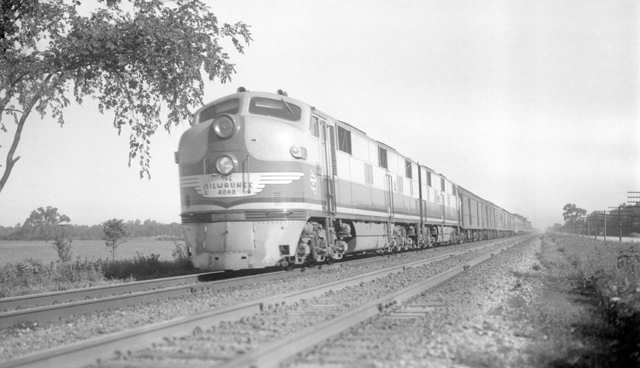
Milwaukee Road
You know what? Stuff used to be cooler.

You know what? Stuff used to be cooler.
dooce just opened the community section of her website. Looks really cool! Her quote:
WOO-HOO! IT’S LIVE! NOW IT’S TIME TO FALL OVER!
Is exactly what it feels like to get a website (no matter how small) live. Now then, back to studying.
On our honeymoon, I trapped a moment in my mind when I was standing behind Mykala with my arms around her waist, on the beach in Hawaii, at sunset. And I said to myself then, “Never ever forget this moment; carry it with you as long as you live.” It’s nice to visit at times like this. Times when I just spelled “systemic” like this: “cystemic.” A little weary, but holding up still.
A bit more from Bobby McFerrin’s Live in Montreal combo teaching/performance show: Bobby McFerrin - Drive.
Holy. Crap.
If you’re short on time, video gets CRAZY AMAZING at 1:55 (preferably with some headphones, to hear the incredible range).
F. Scott Fitzgerald’s Tax Returns, published at The American Scholar:
And though we have saved nothing, we have danced the carmagnole…
I suppose that’s one way to look at it.
When I look back at what I wrote when I got into dental school, I now realize, quite plainly, I had no idea what the hell I was getting myself into. No. Idea. Reminds me of some of the letters from Confederate soldiers when they were going off to war — they had this romantic idea of what war would be like… and they were (1) completely mistaken and (2) grossly unprepared.
14 hour days are not uncommon — and that’s just the time spent at school. And yet, at this point my relationships with my family and my wife are growing so much in the little free time I carve out, that I have the strength to keep going. It’s like learning to play an instrument in the trenches — you’re always surrounded by the chaos, but there’s this little germ of truth and beauty you are nurturing.
Gotan Project - Santa Maria (Del Buen Ayre). Tango with an attitude.
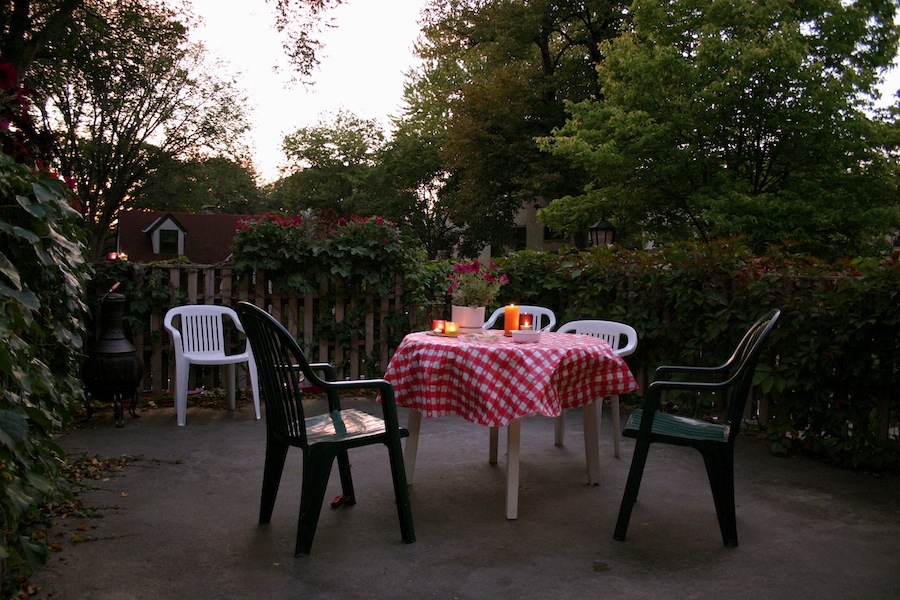
This is a picture of the best dinner I ever had, this past September 19th. Mykala made spectacular foods: fresh bread topped with bruschetta made from tomatoes plucked off our tomato plant no more than 10 minutes before we ate, roasted farmer’s market beets and goat cheese salad (stuuupendous), and a lovely (sweet) wine. Dessert was out and about: ice cream in the warm late summer evening. Perfect.
Louis C.K.: “Is the speed of light too slow for you?”
Every day, for the next 10 days, there is a chance of rain. Average chance of rain: about 40%. Man oh man, if it keeps up like this, we’ll have feet of snow on the ground by Christmas. This is a good thing.
↓ More