Glass + Steel
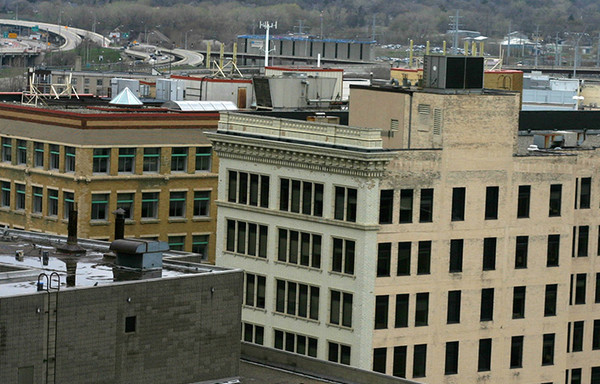
Interesting contrast between that old façade and the new cell phone towers.
Rates of Caesarean sections are climbing, according to a Time magazine article that raises more questions than it answers:
Rates of C-sections have been climbing each year in the past decade in the U.S., reaching a record high of 31% of all live births in 2006. That’s a 50% increase since 1996. Around the world, the procedure is becoming even more common: in certain hospitals in Brazil, fully 80% of babies are delivered by caesarean. How did a procedure originally intended as an emergency measure become so popular? And is the trend a bad thing?
After Mykala described the ripping and tearing that can happen (ouch ouch ouch), I never really thought about childbirth the same. Compare a woman giving birth (the incredible pain, physical trauma, etc.) to an animal giving birth… I mean baby giraffes literally fall out and everybody keeps on truckin’. Anything that gives the mother more options is a good thing, as far as I can tell, as clearly the “natural” way needs some improvement. Keep in mind that the “natural” way also used to involve dying of all sorts of infectious diseases or making it to 40-something on average.
I wonder if any social stigma around preemptively choosing a C-section was an attempt by the author to fabricate conflict for this article.
The English language has the word happenstance, which is a chance happening or event. I propose a modified version of this word as an addition to the language. When something bad happens, it’s crappenstance.
Impress your friends, etc.
If you do your hair when the mirror is foggy, you’ll always love the way it looks.
The New York Times has an article about a family in Akron, Ohio who restored a 1913 house over 12 years:
It was, in fact, as the couple learned only at the closing, about to be condemned. There were large holes in the roof, various furry woodland animals in residence, a barely functional heating and plumbing system. The roof over the master bedroom leaked so badly that the previous owner had placed 55 aluminum baking pans on the floor to catch the rain.
The photo gallery, featuring before and after pictures of the home, offers some more tidbits:
Early in the renovation, Mr. Giffels and the contractor stumbled upon a treasure, $14,000 in $20 bills, wrapped in bank wrappers stamped March 15, 1930.
This Mr. Giffels fellow has written a book about the entire experience, called All the Way Home: Building a Family in a Falling-Down House. It will be released late May of this year.
↓ More