Juice Slam
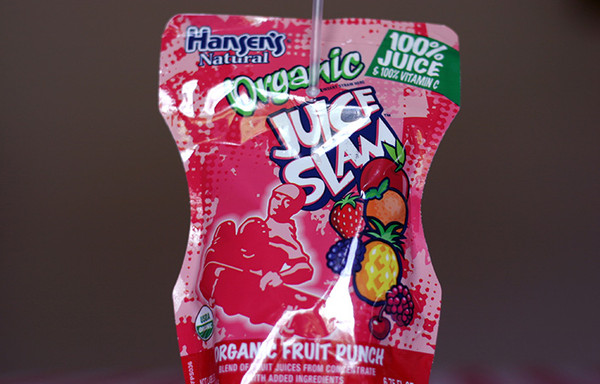
These are unbelievably delicious… and organic.
These are unbelievably delicious… and organic.
Axel Peemoeller designed the signs for a parking garage in Melbourne. What’s so special about that? Well, he won multiple international design awards. This was his solution:

(via Gruber via Derek Matyas).
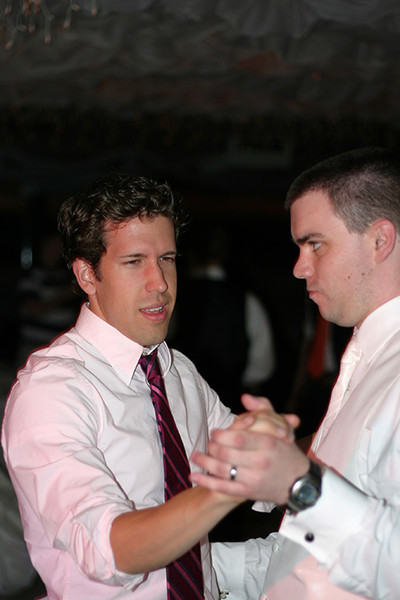
I danced with Justin because his new wife Amber was busy with other dollar dancers.
I love the idea of the latest Improv Everywhere project. The idea is this: get a bunch of identical twins together, dress them the same, and put them on a subway train to form a human mirror. Surreptitiously film the reactions of innocent bystanders and then post the pictures and videos to the internet.
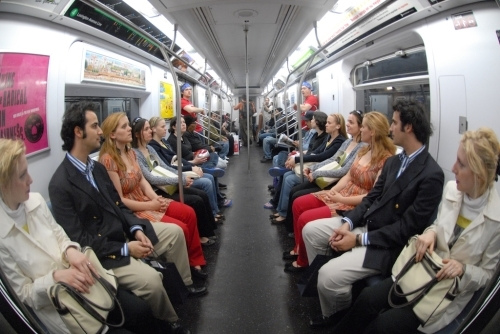
According to the article, some twins matched their accessories, others coordinated the song of their iPods, and all perfectly matched their clothing.
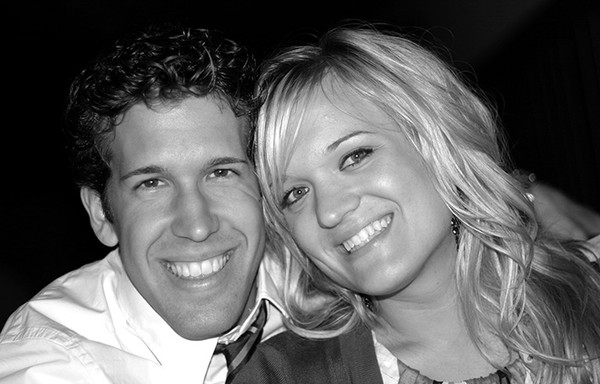
We set up this self-portrait with a timer.
This is the “Pancake Savior”. (via Airbag.)
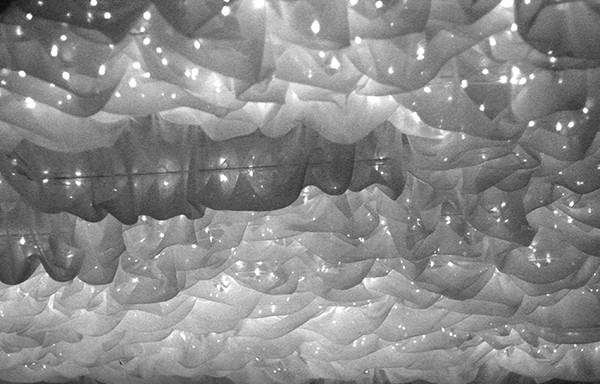
At Justin and Amber’s wedding, we’ve this lovely ceiling!
Last night, I finally finished writing a script to automatically resize images. That way, if I see a picture on the internet that I like, there are very few steps between viewing and putting it on tumbledry — this is nice because the hassle of processing random online images has kept me from posting many. As an example, take a look at this wonderful picture by David Iliff of Canary Wharf in London:
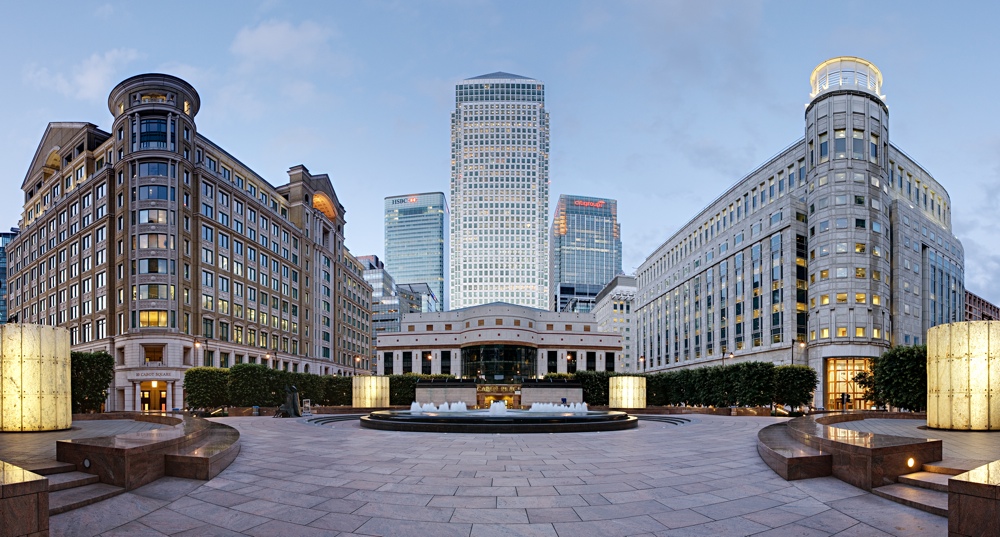
Left center to right center: 8 Canada Square, One Canada Square, and Citigroup Centre. I particularly like the center building. Anyhow, it’s great to now be able to share interesting and/or beautiful photos in this main content area. Plus, I quite like this photograph — it’s a really good panoramic stitch!
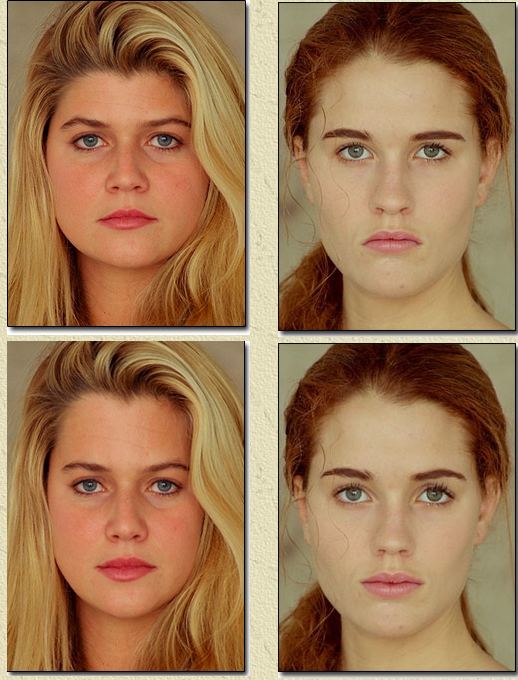
Data-Driven Enhancement of Facial Attractiveness sounds a bit dull at first, but consider what that means: an automated software approach to actually making faces more attractive. I must provide a picture illustrating the results (originals on the top, computer-enhanced results on the bottom):
A quick summary of how this is done actually makes a lot of sense:
The key component in our approach is an automatic facial attractiveness engine trained on datasets of faces with accompanying facial attractiveness ratings collected from groups of human raters. Given a new face, we extract a set of distances between a variety of facial feature locations, which define a point in a high-dimensional “face space”. We then search the face space for a nearby point with a higher predicted attractiveness rating. Once such a point is found, the corresponding facial distances are embedded in the plane and serve as a target to define a 2D warp field which maps the original facial features to their adjusted locations.
To my eyes, this looks like an automated approach to accomplishing the same thing that professional retouchers do to magazine photos. It starts to explain how actors & actresses can resemble but not really look like themselves on the cover of these mags. Apparently, a demonstration application will be issued by this team, so it may be interesting to try the program out on faces we know. (via Waxy)
↓ More