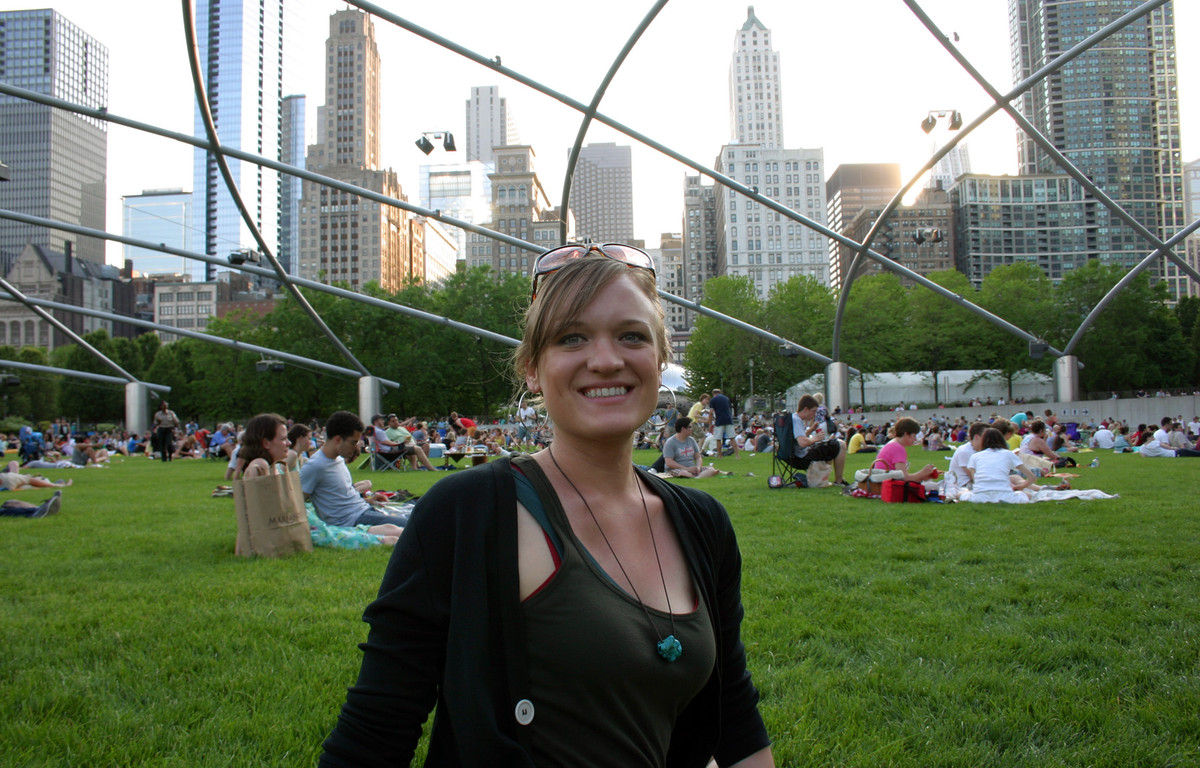
I’m not always a huge fan of Frank Gehry, but he sure knocked it out of the… park, when he designed the Jay Pritzker Pavillion. Mykala’s sitting on the “great lawn” that stretches out from the very high-tech bandshell. We listened to a wonderfully-performed free classical concert, put on during the Memorial Day weekend. The music was atrocious (too much modern dissonance). The night was beautiful. So was Mykala.
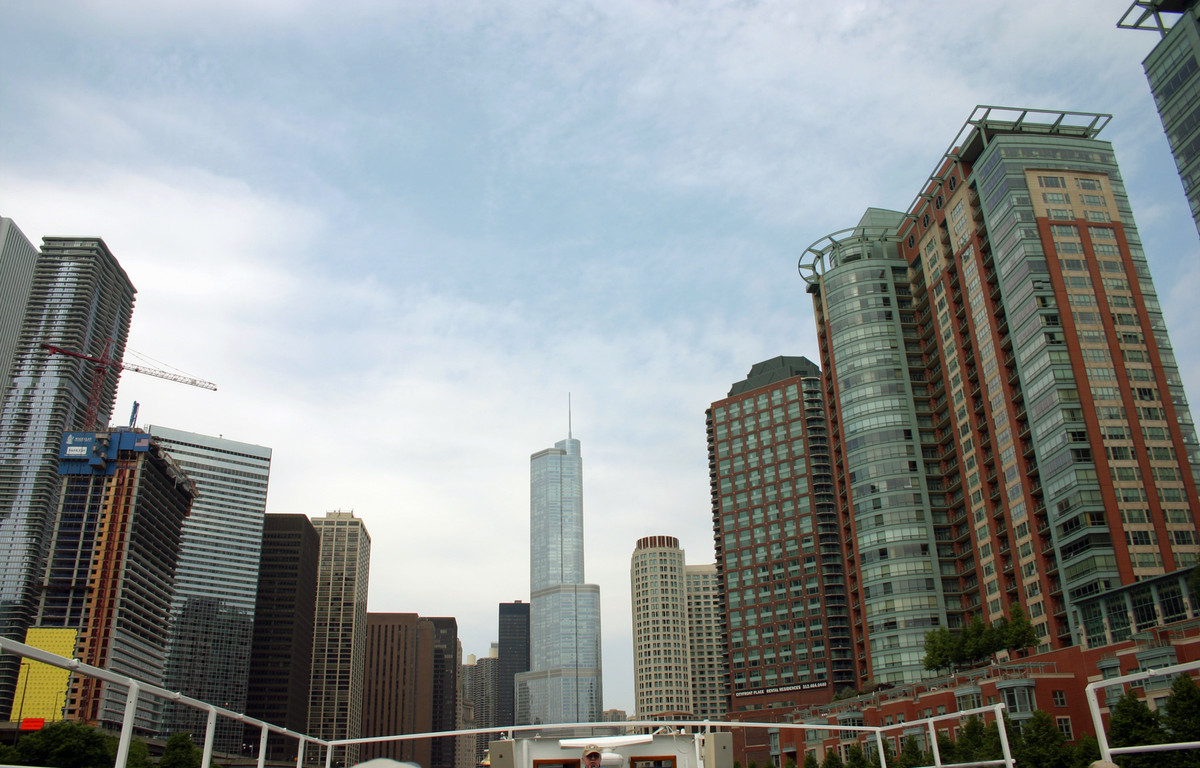
The view at the beginning of the magnificent Chicago Lines Architectural Tour. The nice bluish glass spire at the middle is the Adrian Smith-designed Trump Tower at center. I think it’s a great building, and the tour guide during our cruise seemed to agree.
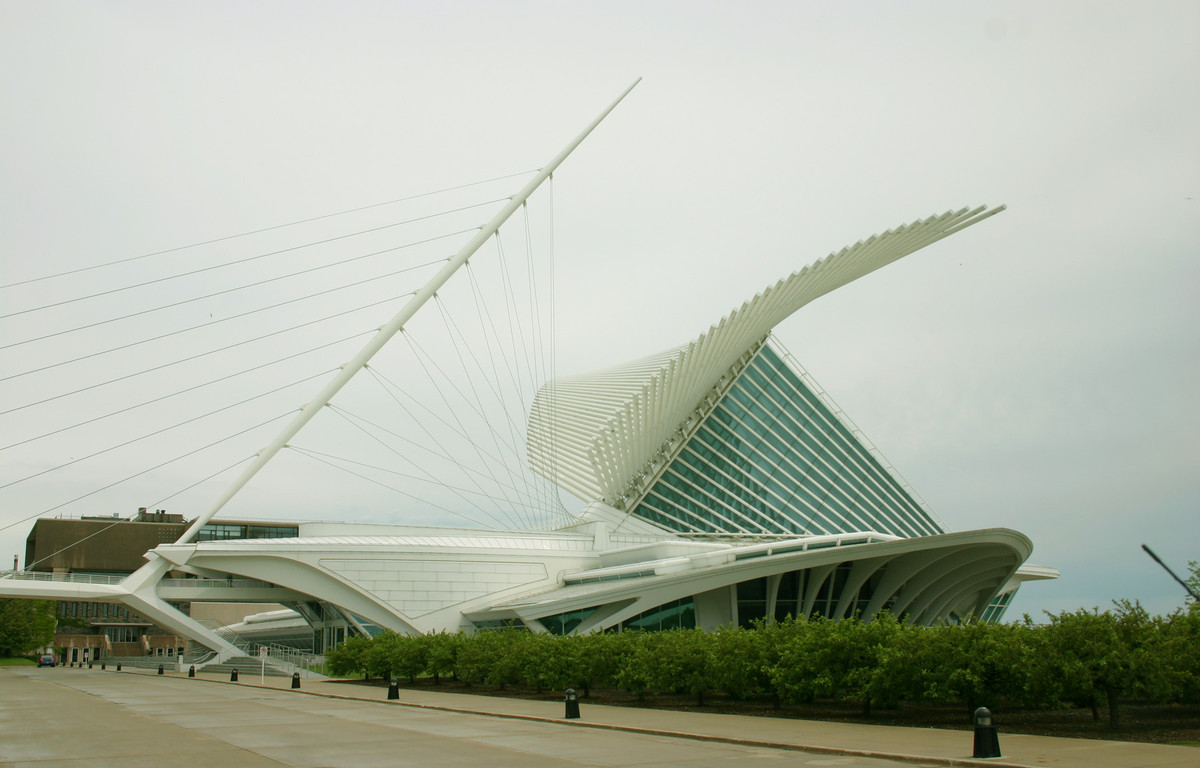
I first saw this in a completely computerized rendering in the singular, incomparable online video called The Third & the Seventh. This is part of the Milwaukee Art Museum. Take it away, Wikipedia:
…designed by Santiago Calatrava (his first completed project in the United States), which opened on May 4, 2001. … The structure contains a movable, wing-like brise soleil which opens up for a wingspan of 217 feet during the day, folding over the tall, arched structure at night or during inclement weather. The brise soleil has since become a symbol for the city of Milwaukee.
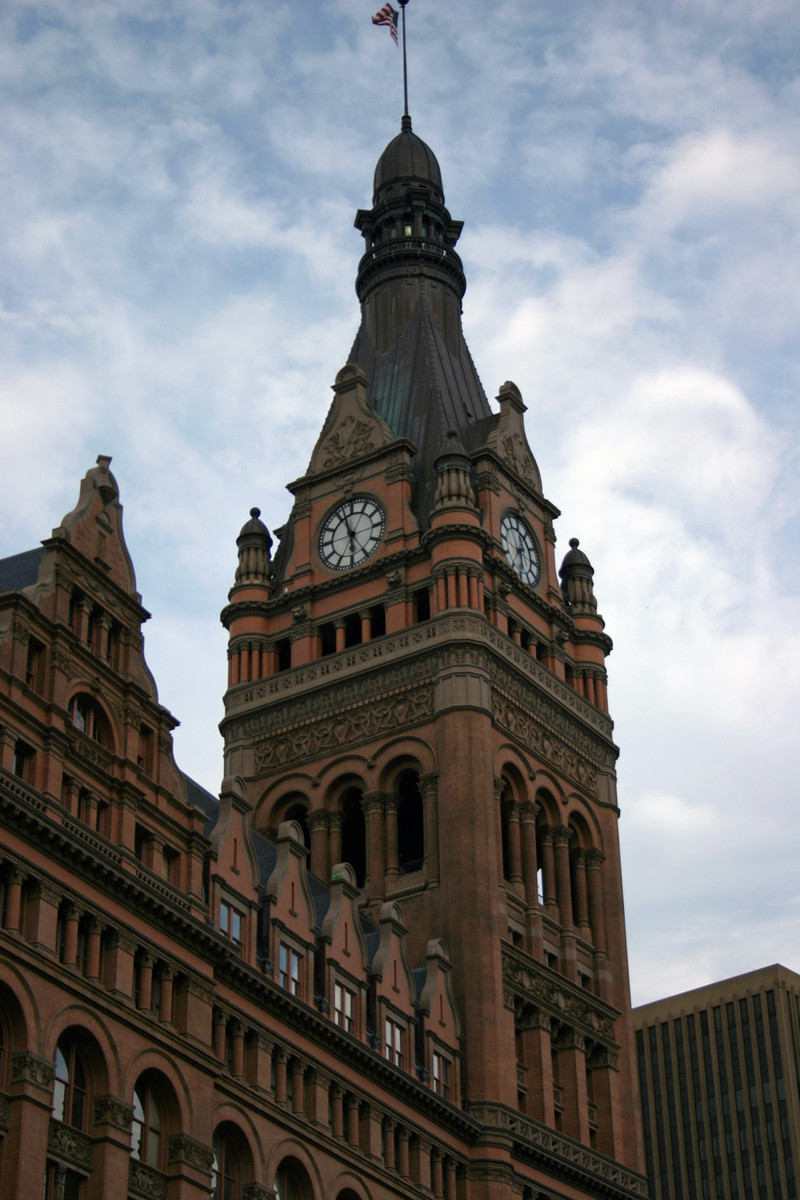
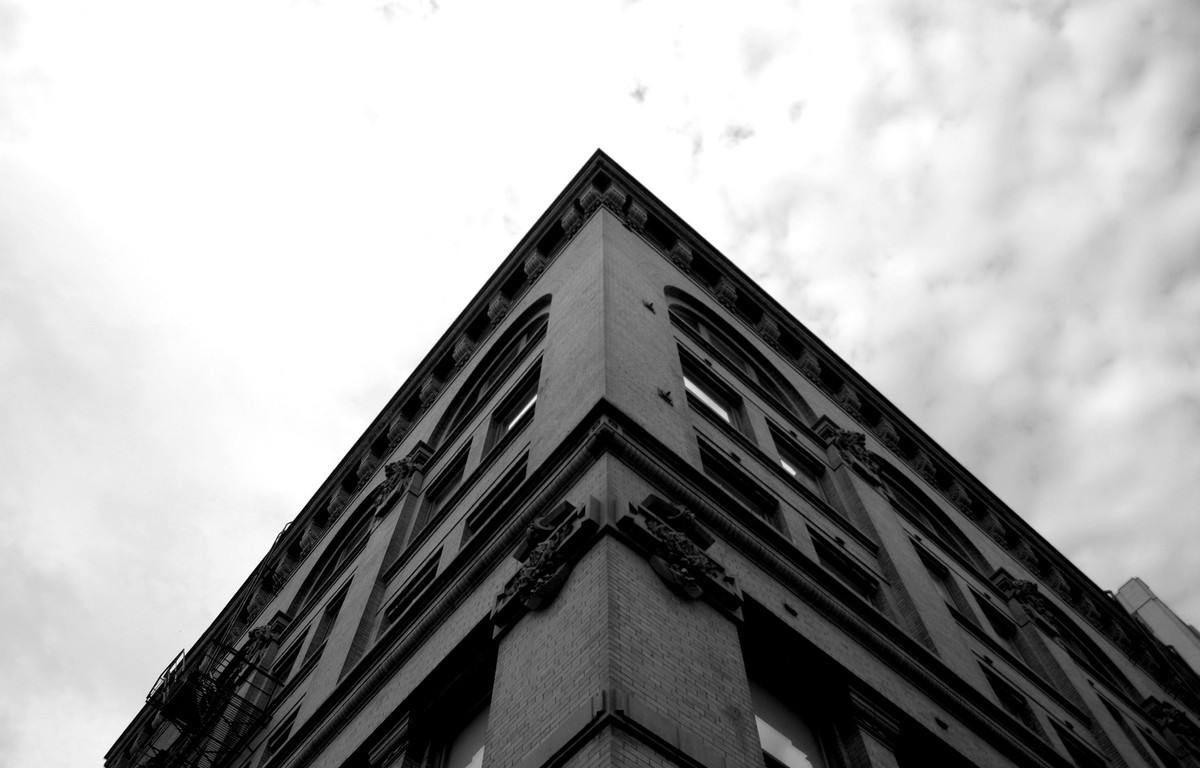
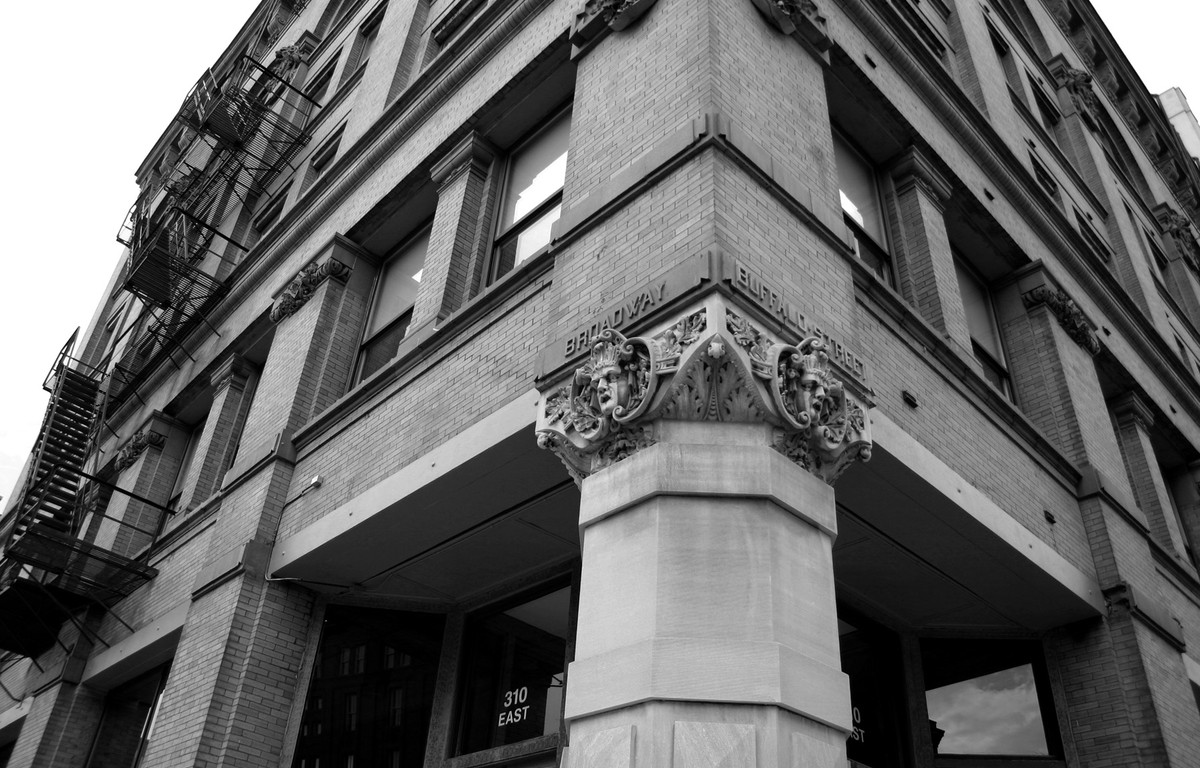
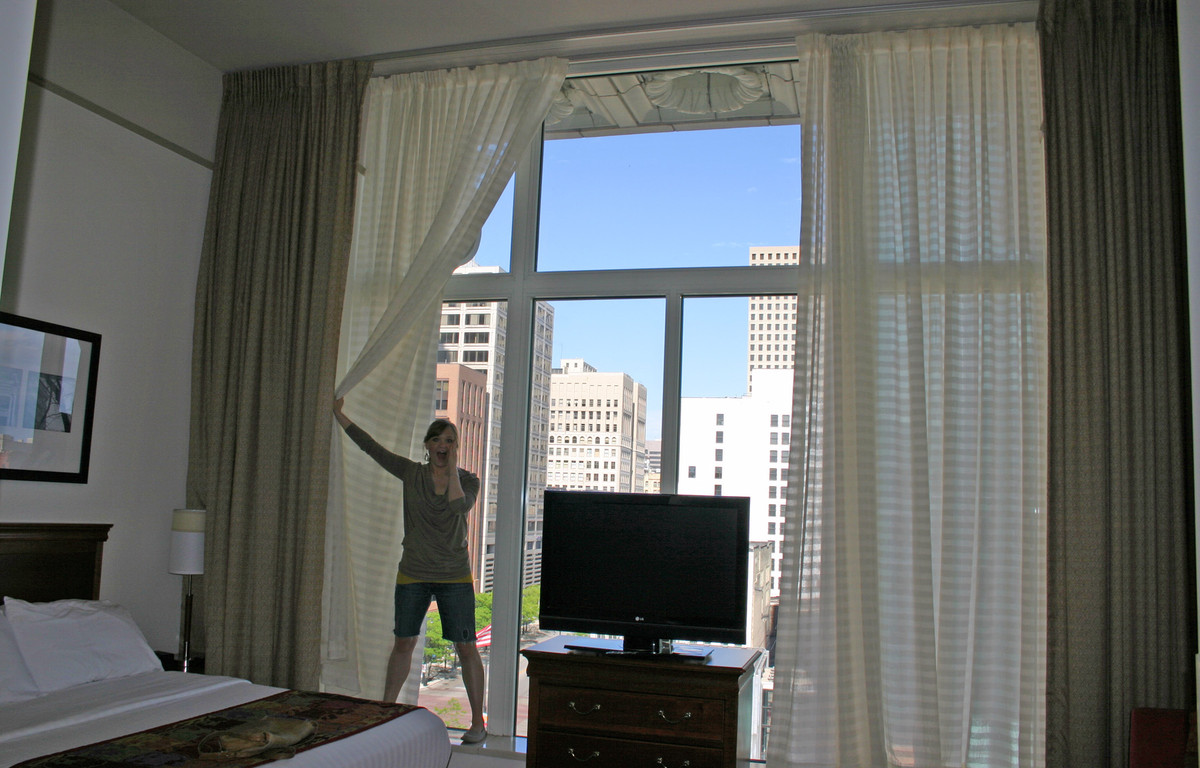
Mykala is in this picture for scale — this building was once the department store Gimbels. According to Wikipedia, this Milwaukee store was where “Adam Gimbel had first found success (and alleged to be the most profitable Gimbel store)…”. It became a Marshall Field’s for a little while, and is now a Marriott Residence Inn. You can see at the top of this picture the large, ornate coffers that make up the architrave of the Roman façade. The curtains are covering the capitals of some huge ionic columns. They don’t build buildings like they used to.
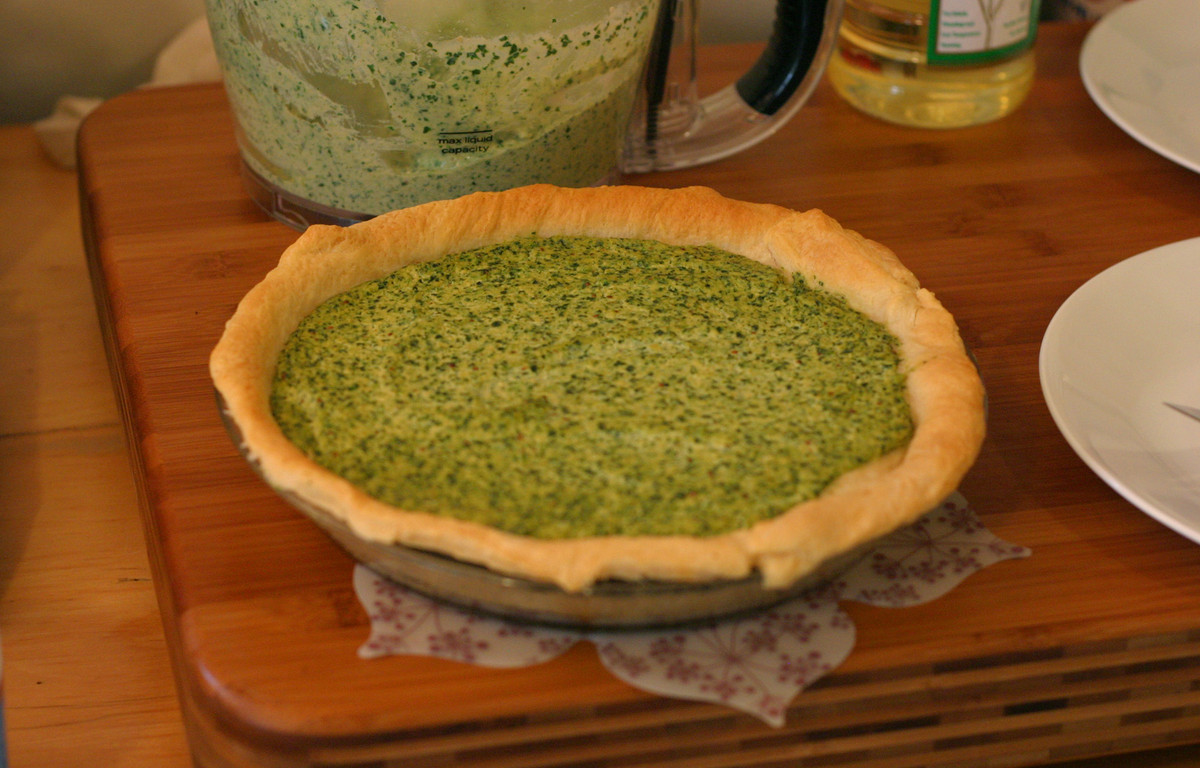
Mykala made this incredible vegan quiche for my birthday. Wish I had gotten the depth of field right on this one, but I think the picture still captures the deliciousness.
This has been making the rounds today, and I don’t usually post something just to link to it (anymore), so you will understand that this is for future reference. Semicolons; So Tricky by Mary Norris at the New Yorker, quotes from a book called “Punctuation..?”:
Its main role is to indicate a separation between two
parts of a sentence that is stronger than a comma but
less strong than dividing the sentence in two with a full
stop…. She looked at me; I was lost for words.
Stronger than a comma, weaker than a period. So, the semicolon has both a comma and a period in it.